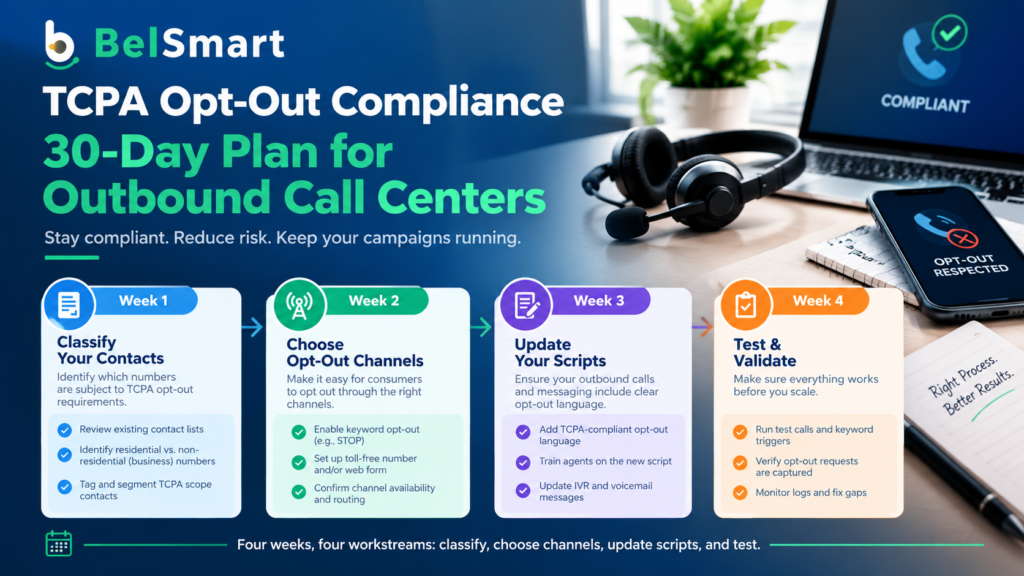
The FCC’s September 30, 2026 open meeting put the TCPA consent revocation overhaul on the table, and the clock for outbound call centers starts now. The new rules take effect 30 days after the final order is published in the Federal Register, replacing the January 31, 2027 “revoke all” deadline many teams were planning around. […]
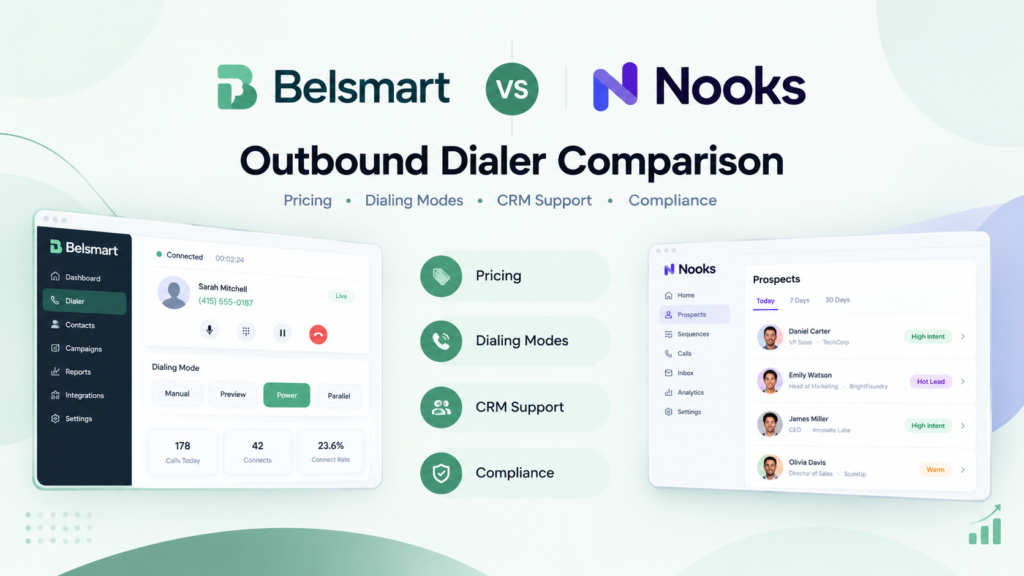
BelSmart vs Nooks: AI Dialer Comparison for 2026
Nooks is an AI revenue agent platform built around parallel dialing, buyer signals, and AI sequencing, with demo-gated pricing reported at $4,000–$5,000 per user per year and a five-seat minimum. Belsmart is an outbound dialer and omnichannel contact center with published per-agent pricing from $15 per month, no seat minimum, and no setup fees. Nooks […]
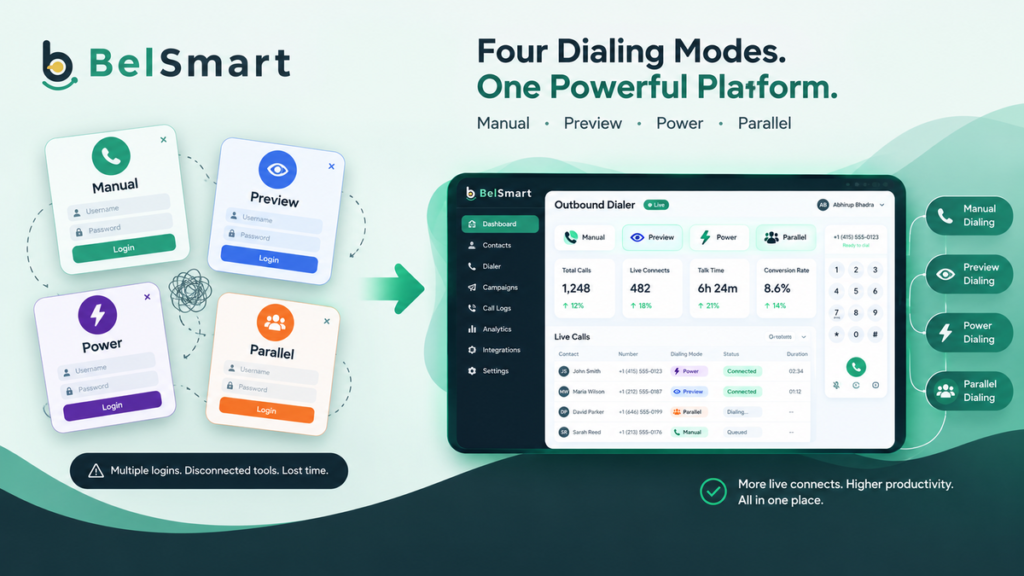
Why “One Dialer, One Mode” Is Dying: The Case for Multi-Modal Dialing Platforms
A multi-modal dialing platform is outbound calling software that runs manual, preview, power, and parallel dialing from a single system, so a team can match dialing speed to lead quality without switching tools. Most dialers on the market still specialize in exactly one mode, and that single-mode design is becoming the biggest hidden bottleneck in […]
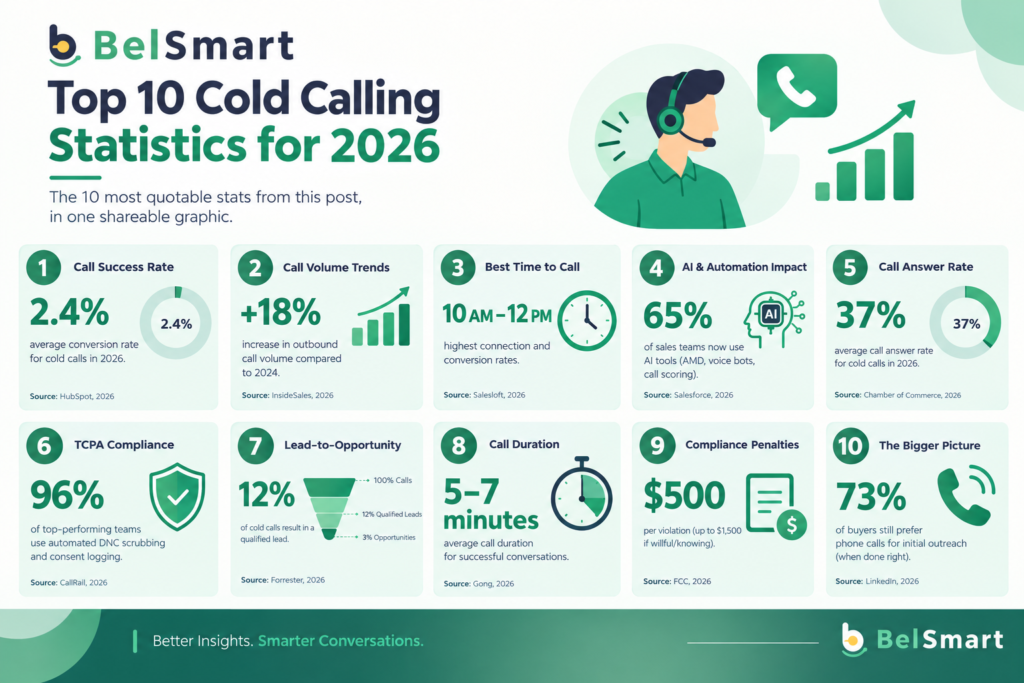
Top 10 Cold Calling Statistics 2026: 50+ Data Points & Sources
The average cold calling success rate in 2026 is 2.7%, up from 2.3% in 2025, according to Cognism’s analysis of over 200,000 calls conducted with WHAM. This guide compiles 50+ cold calling statistics for 2026, each tied to a named source and year, covering success rates, timing, AI adoption, and compliance data for B2B sales […]
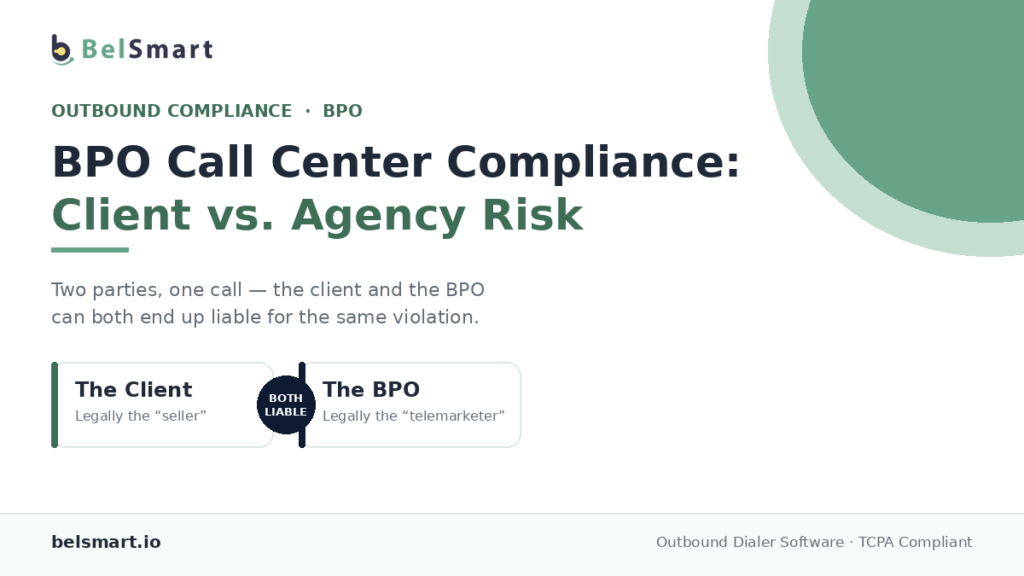
BPO Call Centers in 2026: How Outbound Compliance Rules Differ When You’re Dialing on Behalf of Clients
BPO call center compliance is the set of TCPA, DNC, and consent obligations that apply when a call center dials on behalf of a client brand instead of for itself. It works differently because two separate parties — the client (legally called the “seller”) and the BPO (the “telemarketer”) — can each be held liable […]
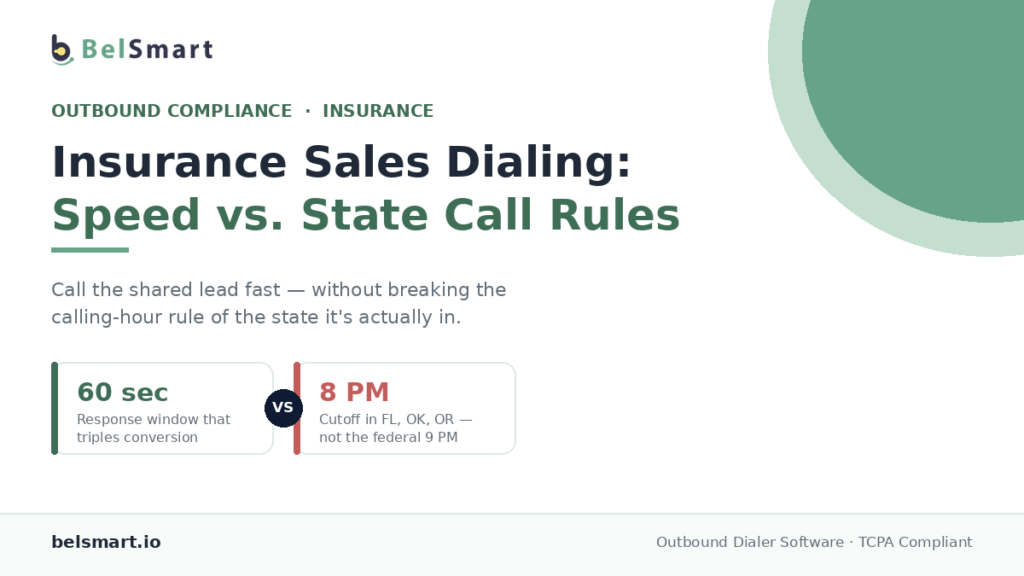
Insurance Sales Dialing: Speed vs. State Call Rules
Insurance sales dialing means calling a new lead fast enough to beat the other agents working that same shared lead, while still following the calling-hour, frequency, and consent rules of the state where that lead actually lives. Those two goals often pull in opposite directions, and getting the timing wrong can cost you the sale, […]
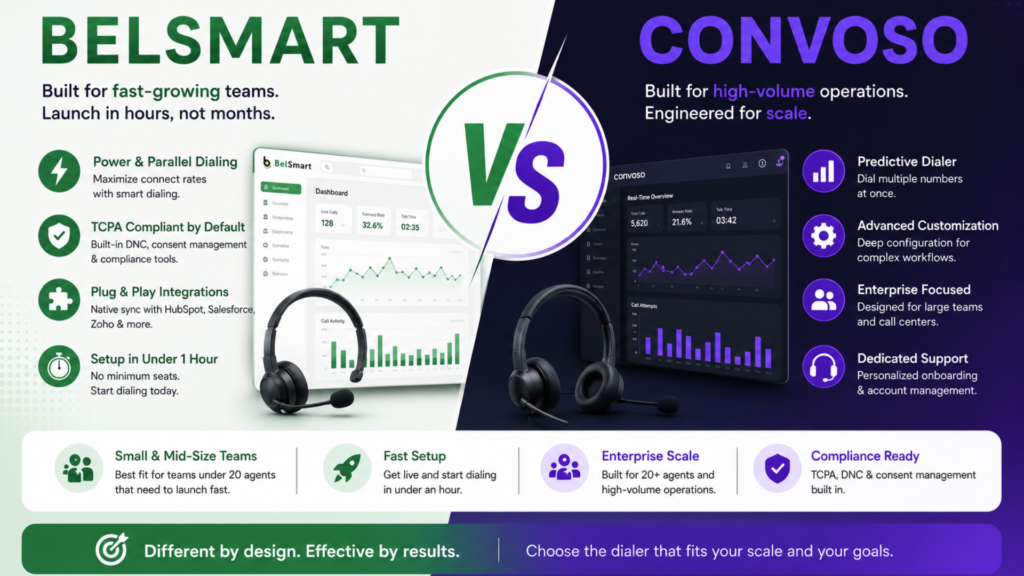
Belsmart vs Convoso (2026): Which Outbound Dialer Is Right for Your Team?
Convoso is built for large, high-volume outbound operations that need predictive dialing and are ready for a multi-week onboarding and an annual contract. Belsmart is outbound dialer software built for small and mid-size sales teams that want power and parallel dialing, built-in TCPA compliance, and setup in under an hour without a minimum seat count. […]
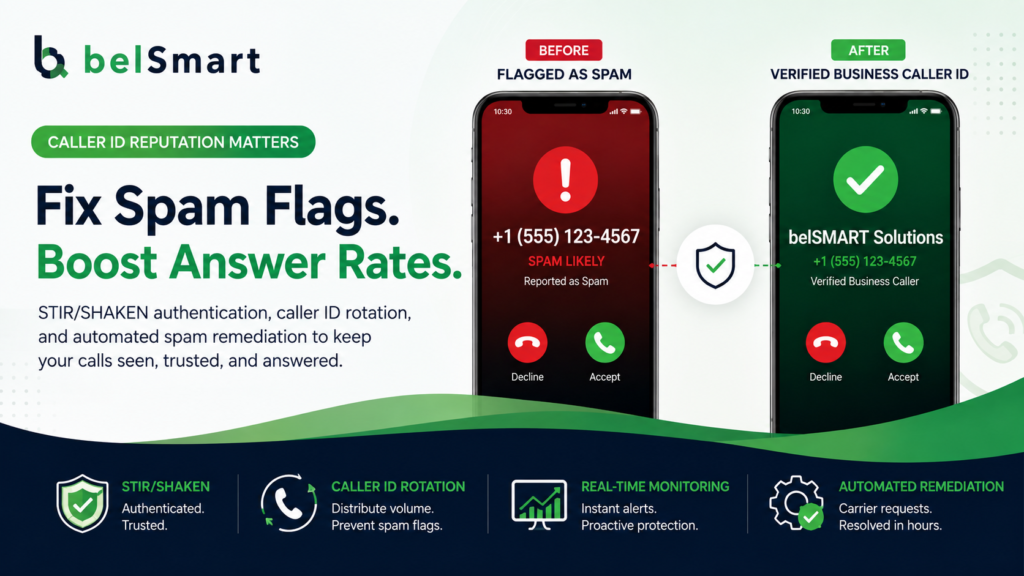
Caller ID Management: How to Stop Your Numbers From Getting Flagged as Spam
A caller ID flagged as spam means a carrier’s call-analytics engine has attached a label — “Spam Likely,” “Scam,” or “Potential Fraud” — to an outbound number before the recipient even sees it ring. The fix requires a combination of STIR/SHAKEN authentication, caller ID rotation, reputation monitoring, and formal carrier remediation requests. Most outbound teams […]
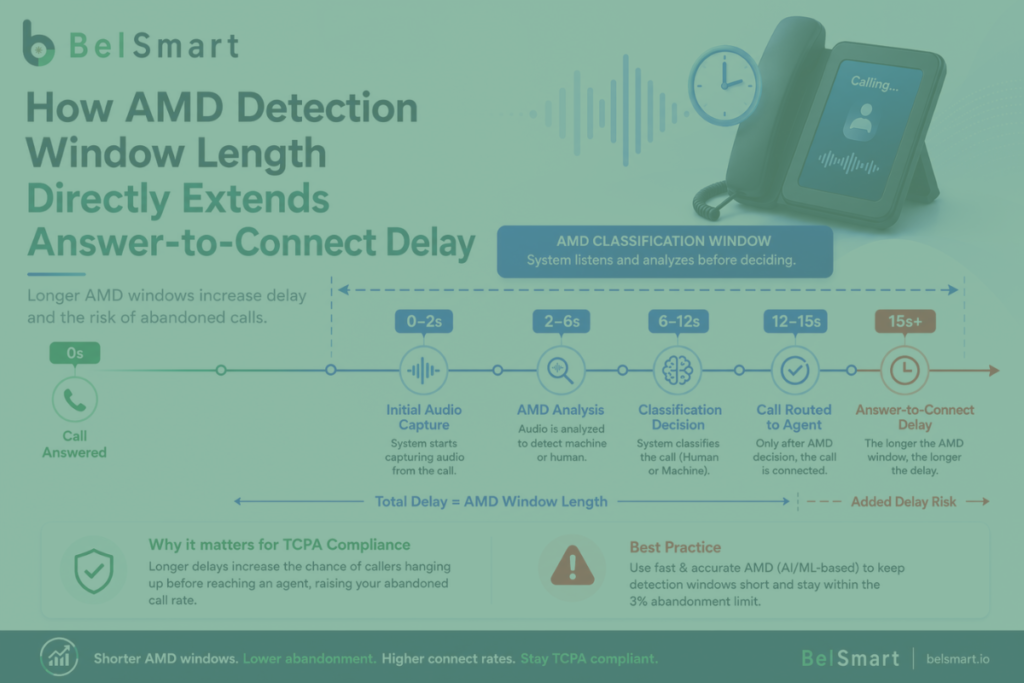
AI AMD Accuracy: How Belsmart Detects Voicemail in Under 2 Seconds
Answering machine detection (AMD) accuracy depends almost entirely on which detection method is running underneath it. Legacy rule-based AMD is generally documented in the low-to-mid 80% range under real-world conditions, while machine-learning classifiers typically achieve accuracy in the mid-to-high 90% range. Modern AI-powered AMD typically reaches 95–99% accuracy, while legacy rule-based systems often top out […]
Dialer Ratios Explained: 1:1 vs 2:1 vs 6:1 and What They Mean for TCPA Risk
A dialer ratio is the number of phone lines an outbound dialer calls simultaneously for every available agent. A 1:1 ratio calls one number per agent and carries minimal TCPA risk. A 2:1 to 6:1 ratio calls multiple numbers per agent to increase live connects — but every line above 1:1 creates the possibility of […]