How to Avoid TCPA Violations When Running Outbound Dialing Campaigns
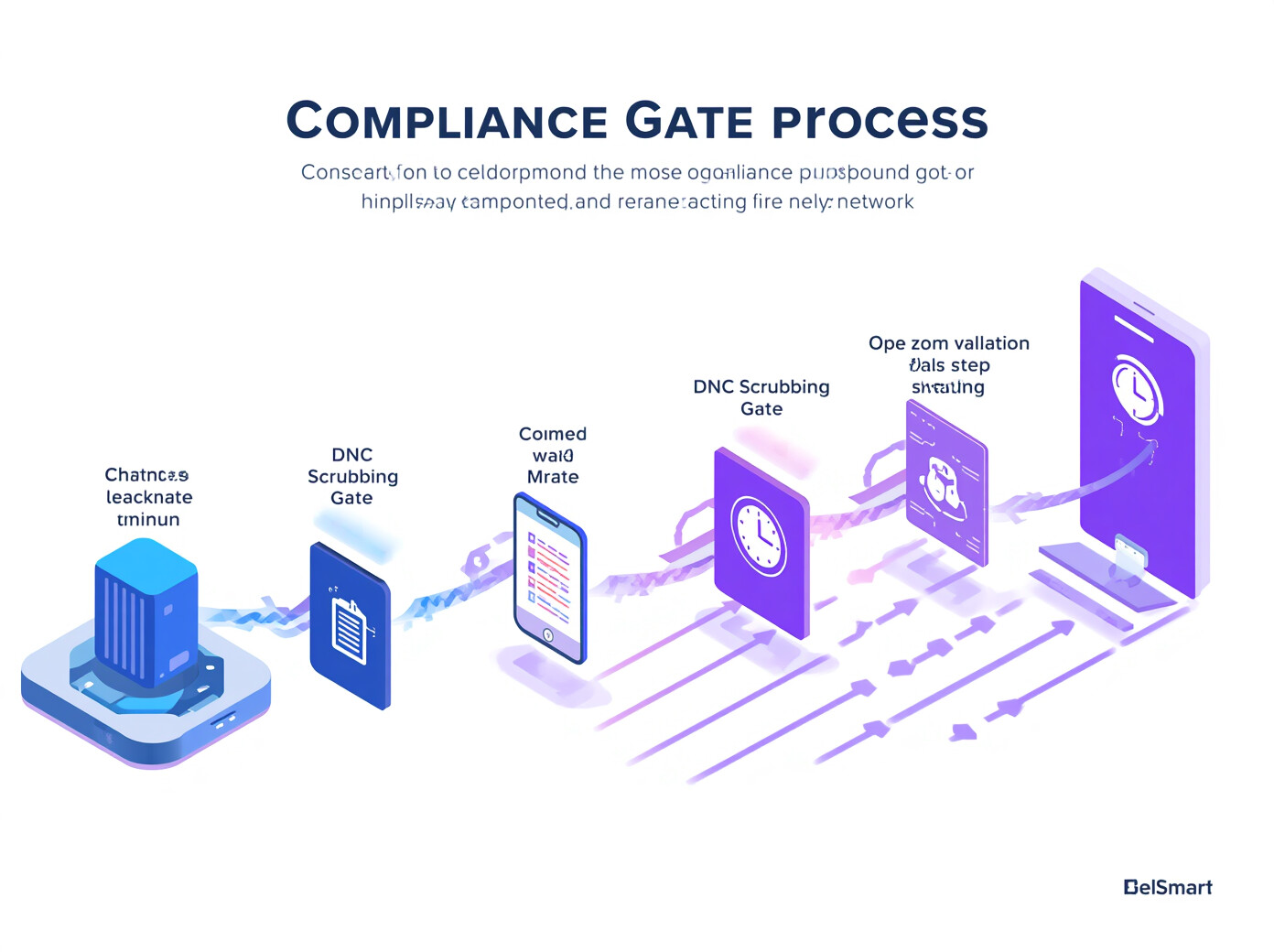
If you want to know how to avoid TCPA violations, focus on five controls before any agent or dialer places a call:
- Capture documented consent — obtain prior express written consent for autodialed or prerecorded marketing calls, and store proof (timestamp, source, IP, form language).
- Scrub every list — check numbers against the National Do Not Call Registry, state DNC lists, and your internal DNC list at least every 31 days.
- Respect calling windows — dial only between 8 a.m. and 9 p.m. in the recipient’s local time, and apply stricter state limits where they exist.
- Honor opt-outs fast — process any reasonable revocation of consent within 10 business days, across channels.
- Enforce rules in the dialer — configure your platform so non-compliant calls are blocked automatically, not caught after the fact.
- Plaintiffs filed 507 TCPA class actions in Q1 2025 alone — more than double the same period in 2024 (Bradley Arant Boult Cummings)
- WebRecon tracked 2,588 TCPA lawsuits across January–November 2025
- Roughly 80% of TCPA suits are filed as class actions, versus only 2–5% under other consumer statutes
- Statutory damages run $500 per call or text, up to $1,500 per willful violation, with no cap on aggregate damages
- The one-to-one consent rule was vacated on January 24, 2025 — but prior express written consent still governs automated marketing calls
- Since April 11, 2025, opt-outs by any reasonable method must be honored within 10 business days
Each of these controls maps to a specific violation pattern that plaintiffs’ firms actively hunt for. The rest of this guide explains why the risk has grown, which mistakes generate the most lawsuits, and how to operationalize compliance inside a modern dialing stack.
1. Why TCPA Compliance Matters More in 2025–2026
The Telephone Consumer Protection Act is more than three decades old, yet litigation under it is accelerating rather than fading. In the first quarter of 2025 alone, plaintiffs filed 507 TCPA class actions — more than double the volume from the same period in 2024, according to analysis published by Bradley Arant Boult Cummings. Across January through November 2025, WebRecon tracked 2,588 TCPA lawsuits, and roughly 80% of TCPA suits are filed as class actions, compared with only 2–5% under other consumer statutes.
The economics explain the trend. Statutory damages run $500 per call or text, and up to $1,500 per willful violation. Because damages accrue per contact, a single misconfigured campaign that dials 10,000 numbers without valid consent can create seven-figure exposure overnight. Consequently, compliance is not a legal afterthought; it is a core operational KPI for any outbound team.
Two regulatory shifts define the current landscape:
- FCC one-to-one consent — vacated. On January 24, 2025, the Eleventh Circuit struck down the FCC’s one-to-one consent rule in Insurance Marketing Coalition v. FCC, and the Commission later removed the language from its regulations. However, the baseline has not moved: autodialed or prerecorded marketing calls to wireless numbers still require prior express written consent. Lead buyers should therefore continue to demand clear, seller-specific consent evidence, because courts — not just regulators — scrutinize how consent was obtained. (The full rule history is covered in our complete TCPA compliance guide.)
- Consent revocation — expanded. Since April 11, 2025, consumers may revoke consent through any reasonable method (a spoken “stop calling,” a text reply, an email), and businesses must honor the revocation within 10 business days. The FCC waived the cross-channel, enterprise-wide portion of the rule until April 2026, so multi-department organizations should already have unified opt-out processing in place.
2. The 7 Most Common TCPA Violations in Outbound Campaigns
Litigation data and audit experience point to a short list of recurring failures. Notably, most of them are process failures rather than deliberate misconduct.
| # | Violation | Typical Root Cause |
|---|---|---|
| 1 | Calling numbers on the National DNC Registry | Stale scrub files older than 31 days; lists loaded without a scrub step |
| 2 | No valid prior express written consent | Purchased leads with weak or undocumented consent language |
| 3 | Ignoring internal opt-outs | Opt-outs logged in one system but never synced to the dialer |
| 4 | Calling outside permitted hours | Dialer set to the company’s time zone instead of the recipient’s area code or ZIP |
| 5 | Dialing reassigned or wrong numbers | No check against the FCC Reassigned Numbers Database |
| 6 | Prerecorded or AI voice messages without consent | Voicemail drops and AI voice bots treated as “not really calls” |
| 7 | Missing identification and opt-out disclosures | Scripts omit caller name, company, and callback number |
3. How to Avoid TCPA Violations: A Step-by-Step Compliance Checklist
The following checklist converts the statute into an operating procedure. Treat it as a pre-flight sequence: no campaign launches until every step is verified.
- Document a written compliance policy. A written policy, agent training, and DNC list maintenance are the prerequisites for the TCPA safe harbor defense. Without them, even a good-faith error is difficult to defend.
- Verify consent at list load. Reject records that lack a consent timestamp, capture source, and the exact disclosure language shown to the consumer. For purchased leads, require the seller to supply this evidence — and audit samples.
- Run DNC scrubbing before every campaign. Scrub against the National DNC Registry (data no older than 31 days), applicable state registries, and your internal suppression list. Automate the schedule so it cannot be skipped.
- Check the Reassigned Numbers Database. Querying the FCC’s RND before dialing provides its own safe harbor if a number was reassigned after consent was given.
- Configure time-zone and frequency guardrails. Enforce the 8 a.m.–9 p.m. local-time window based on area code and ZIP, and cap attempts per number (Florida, for example, limits sales calls to three per 24 hours).
- Standardize scripts and recording disclosures. Every call should identify the agent, the company, and a callback number. Additionally, because a dozen-plus states require all-party call recording consent, play a recording disclosure on every call rather than maintaining state-by-state script variants.
- Process revocations within 10 business days. Accept opt-outs by any reasonable method — voice, SMS reply, email — and propagate them to every dialing system and channel automatically.
- Audit monthly and keep the evidence. Sample call recordings, review scrub logs, and retain consent and suppression records for at least four years, matching the TCPA’s statute of limitations.
4. How Dialer Software Enforces Outbound Campaign Compliance
Manual compliance fails at scale because it depends on people remembering rules under quota pressure. Modern platforms therefore move enforcement into the dialing engine itself, where a rule cannot be forgotten — it simply blocks the call. In practice, a TCPA safe harbor dialer configuration includes:
- Pre-dial suppression: the dialer checks every number against DNC registries, internal opt-outs, and litigator lists in real time, before the carrier sees the call.
- Time-zone gating: records outside the permitted local window are automatically held and re-queued.
- Consent-flag routing: numbers without a written-consent flag can be routed only to manual or preview dialing modes, never to automated modes.
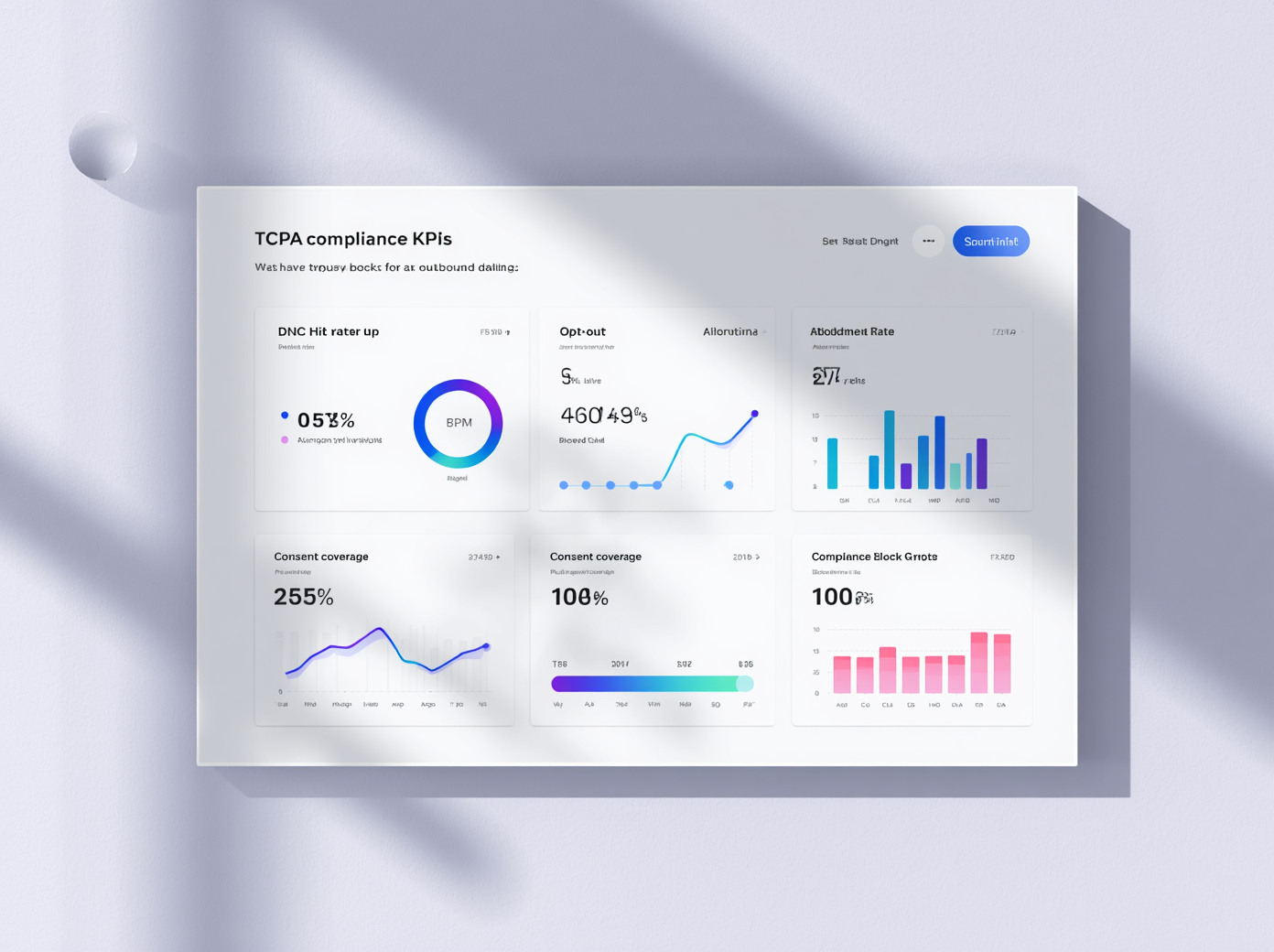
- Abandonment control: predictive pacing keeps abandoned calls under the 3% threshold measured per campaign per 30 days.
- Immutable audit logs: every dial decision — including blocked calls — is logged for evidence.
Platforms such as Belsmart illustrate how this works in practice: DNC scrubbing, local-time enforcement, and consent-based routing run as automatic gates across power, preview, and parallel dialing modes, so compliance holds even as call velocity increases. Whichever platform a team uses, the evaluation question is the same: can an agent physically place a non-compliant call? If the answer is yes, the control is a suggestion, not a safeguard.
5. DNC Scrubbing Best Practices: A Walkthrough
Because DNC violations remain the most common TCPA claim, the scrubbing workflow deserves its own standard operating procedure. A defensible cycle looks like this:
Step 1 — Subscribe and download
Register with the FTC’s National DNC Registry for every area code you dial, then schedule automated downloads. The safe harbor requires data no more than 31 days old; however, high-volume teams typically refresh weekly to shrink the exposure window between a consumer registering and your next scrub.
Step 2 — Layer your suppression lists
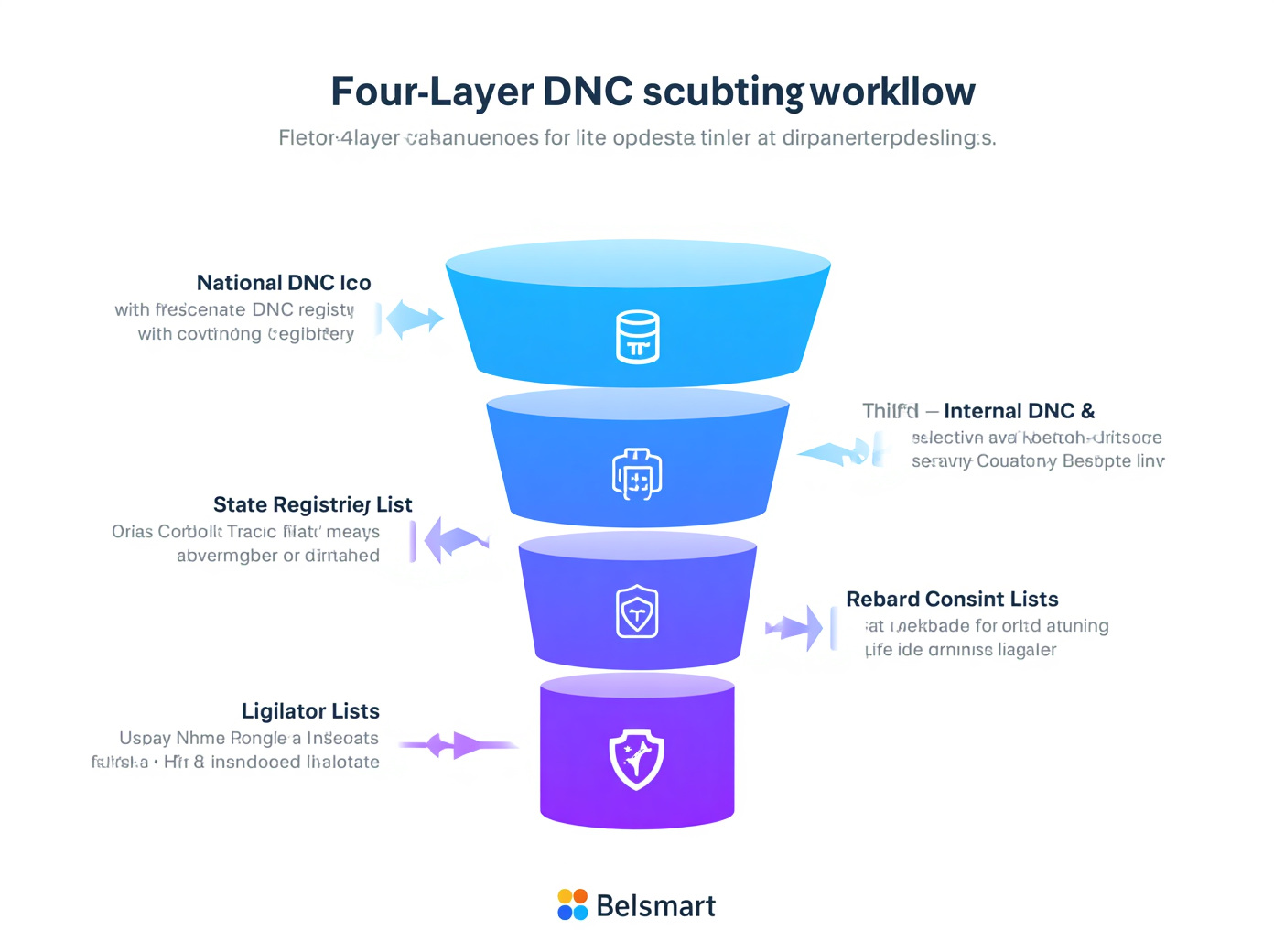
Scrub in sequence: national registry → state registries (a dozen states maintain their own) → internal DNC and revoked-consent list → known-litigator lists. Each layer removes a different risk class, and the internal list is legally the least forgiving — an ignored direct opt-out is hard to defend as an accident.
Step 3 — Apply the exemption logic carefully
An established business relationship or written consent can permit calls to registered numbers, but exemptions expire (18 months after a transaction; 3 months after an inquiry) and a company-specific do-not-call request overrides any exemption. Consequently, exemption flags should carry expiry dates in your data model, not just yes/no values.
Step 4 — Log everything
Store the scrub date, registry file version, records removed, and the user or system that executed the scrub. In litigation, the scrub log is often the difference between invoking the safe harbor and paying a settlement.
Key Takeaways
- TCPA litigation grew sharply in 2025, and per-call statutory damages make class actions economically attractive to plaintiffs’ firms
- Consent, DNC scrubbing, calling windows, revocation handling, and disclosures cover the vast majority of violation patterns
- The vacated one-to-one consent rule eased lead-generation mechanics, yet written consent and documentation standards still decide cases
- Enforcement belongs in the dialer, not in agent memory — automated gates plus audit logs create both prevention and proof
- State mini-TCPAs mean national campaigns need state-level rules; federal compliance alone is insufficient
Frequently Asked Questions
What is the fastest way to avoid TCPA violations?
Automate the controls: consent verification at list load, DNC scrubbing on a fixed schedule, time-zone gating, and opt-out syncing. Automation removes the human error that causes most violations, and the audit trail it produces supports a safe harbor defense.
What qualifies as prior express written consent?
A signed agreement — electronic signatures count under the E-SIGN Act — that clearly authorizes autodialed or prerecorded marketing calls to a specific number, with disclosure that consent is not a condition of purchase. Pre-checked boxes and buried terms rarely survive scrutiny.
Does the TCPA apply to text messages and AI voice calls?
Yes. Courts and the FCC treat SMS as calls under the TCPA, and the FCC confirmed in 2024 that AI-generated voices count as “artificial or prerecorded” voices, which require prior express consent.
How long should I keep consent and DNC records?
Retain consent evidence, scrub logs, and opt-out records for at least four years — the TCPA’s federal statute of limitations — and longer where state laws extend the window.
Can manual dialing eliminate TCPA risk?
It reduces autodialer exposure but not DNC, calling-hour, disclosure, or state-law risk. Moreover, several state mini-TCPAs define regulated technology broadly enough to cover many “manual” click-to-dial setups, so scrubbing and consent still apply.
Block the Violation Before the Dial
See how automated DNC scrubbing, consent-gated routing, time-zone enforcement, and immutable audit logs work inside a modern outbound platform.
See Belsmart Compliance FeaturesDisclaimer: This article provides general educational information, not legal advice. Consult qualified counsel before finalizing your compliance program.