Why Does Your Business Need Omnichannel Contact Center Software to Enhance Customer Experience?
Omnichannel contact center software unifies every customer communication channel — voice calls, SMS, email, chat, and social media — into one platform with shared customer context. Businesses need it because customers now switch between channels constantly, and companies that deliver a connected experience across those channels see higher satisfaction, stronger loyalty, and more revenue per customer than companies managing each channel in isolation.
Customers no longer follow a single path to reach a business. A prospect might see an ad, send a text, receive a callback, and finish the conversation over email — all within the same day. If your team handles each of those touchpoints in a separate tool, the customer feels the seams: repeated questions, lost context, and slow resolutions.
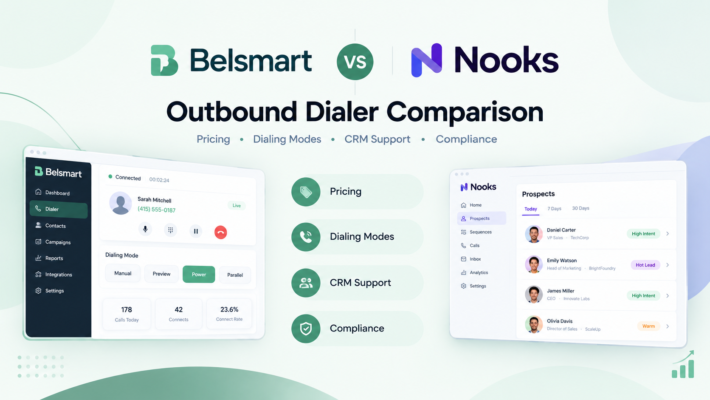
That is the problem omnichannel contact center software solves. It connects every channel to a single customer record, so every agent — on every channel — knows exactly who the customer is and what has already happened. For teams that also run proactive outreach, pairing this unified view with a modern outbound dialer software platform turns the contact center from a cost center into a revenue engine.
What is Omnichannel Contact Center Software?
Omnichannel contact center software is a cloud-based communication platform that manages inbound and outbound customer interactions across multiple channels — phone, business SMS, email, live chat, and social messaging — from one unified interface with a shared interaction history.
The key word is unified. A multichannel setup gives you many channels; an omnichannel platform connects them. When a customer texts after a missed call, the agent sees the full conversation thread, not a blank screen. That continuity is what customers experience as “great service.”
Omnichannel vs. Multichannel: What’s the Difference?
| Multichannel | Omnichannel | |
|---|---|---|
| Channels available | Multiple (voice, SMS, email, chat) | Multiple (voice, SMS, email, chat) |
| Customer data | Siloed per channel | Unified customer record across channels |
| Context when switching channels | Lost — customer repeats themselves | Preserved — conversation continues seamlessly |
| Agent workflow | Separate tools and logins | One interface for all interactions |
| Reporting | Per-channel metrics only | Full customer-journey analytics |
In one sentence: multichannel means you have many channels; omnichannel means those channels work together.
How an Omnichannel Contact Center Platform Enhances Customer Experience?
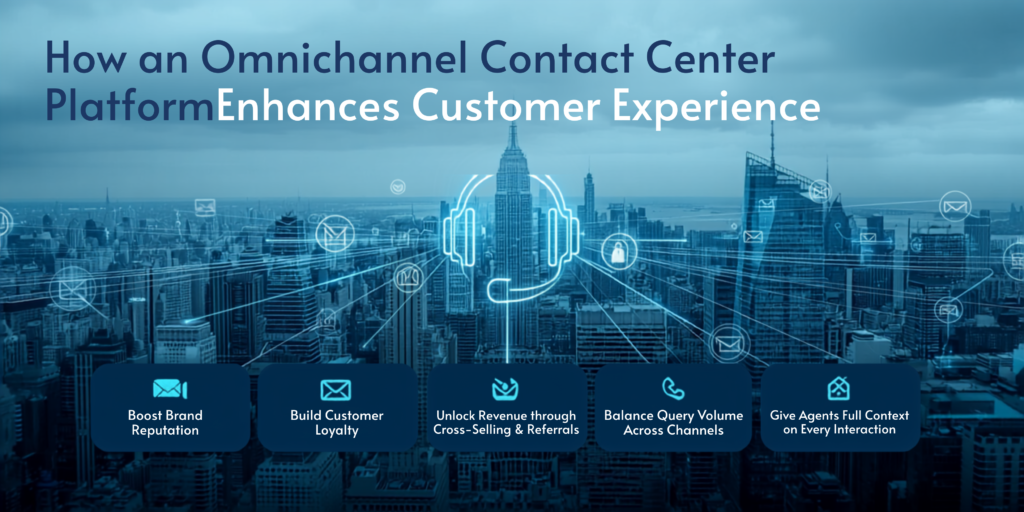
Boost Your Brand’s Reputation
Every smooth, context-aware interaction builds trust. Customers who get fast answers without repeating themselves are far more likely to leave positive reviews and recommend your business. Over time, that word-of-mouth compounds into stronger brand awareness and a healthier pipeline of inbound interest.
Builds Customer Loyalty That Pays Off
Consistency is the foundation of loyalty. When service quality is identical whether a customer calls, texts, or emails, churn drops and customer lifetime value rises. An omnichannel contact center solution makes that consistency operational rather than aspirational — every interaction is handled with the same context and the same standards.
Unlocks Revenue Through Cross-Selling and Referrals
Agents with a complete view of customer history can spot genuine upsell and cross-sell moments instead of guessing. And satisfied customers refer others — a steady, low-cost source of qualified leads. Teams that combine unified customer data with structured lead management convert those opportunities at a measurably higher rate.
Balances Query Volume Across Channels
Not every question needs a phone call. Omnichannel platforms deflect routine queries to SMS, chat, or voice bot automation, reserving live agents for conversations that genuinely need a human. The result: shorter queues, lower cost per interaction, and agents who spend their time on high-value conversations.
Gives Agents Full Context on Every Interaction
With CRM integration connecting platforms like HubSpot, Salesforce, and Zoho CRM directly to the contact center, agents see purchase history, open tickets, and previous conversations before they say hello. Personalized service stops depending on an agent’s memory and becomes the default.
Where Outbound Dialing Fits Into an Omnichannel Strategy
An omnichannel strategy is not only about answering customers — it is also about reaching them proactively. Renewal reminders, follow-ups on quotes, re-engagement campaigns, and appointment confirmations are all outbound motions, and they perform best when powered by purpose-built dialing technology:
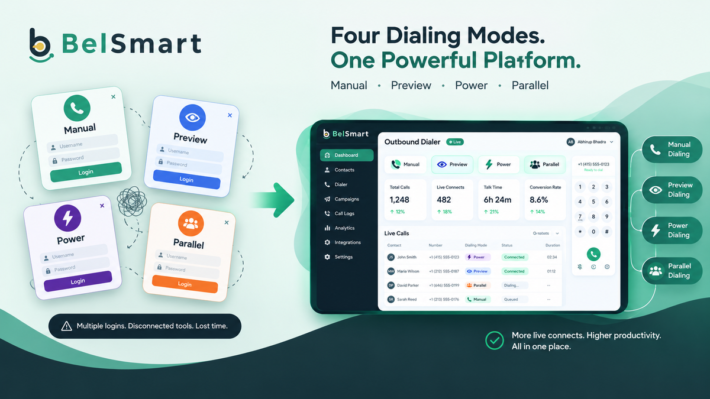
- A power dialer automatically advances agents to the next contact the moment a call ends — ideal for follow-up queues and SDR teams.
- A parallel dialer dials multiple lines simultaneously and connects agents only to live answers — built for high-volume campaigns.
- A preview dialer shows the full customer record before each call — perfect for consultative conversations in insurance and financial services.
Combined with SMS follow-ups and CRM-logged outcomes, outbound dialing closes the loop: customers hear from you at the right time, on the right channel, with full context — and every outreach stays protected by built-in outbound compliance controls like DNC scrubbing and consent logging.
How to Get the Most From Omnichannel Contact Center Software
Unify Every Channel in One Interface
Consolidate voice, SMS, email, and chat into a single agent workspace. One screen means faster responses, no missed messages, and no duplicated effort across tools.
Automate Routine Work
Automate ticket creation, follow-up scheduling, and first responses. Automation frees agents from repetitive tasks so they can focus on complex, revenue-relevant conversations — and it ensures nothing slips through the cracks after hours.
Integrate With Your CRM From Day One
Native CRM sync means every call, message, and disposition logs automatically. Agents always work with current data, managers get accurate reporting, and no one wastes time on manual data entry.
Measure the Full Customer Journey, Not Just Channels
Track connect rates, response times, and resolution rates across the entire journey. Journey-level analytics reveal where customers drop off and which channels drive conversions — insight that per-channel reporting simply cannot provide.
Industries That Benefit Most From Omnichannel Contact Centers
Omnichannel communication delivers outsized returns in industries where speed-to-contact and follow-up consistency decide the deal:
- Real estate — instant callbacks on new listings plus SMS scheduling for showings.
- Insurance — renewal outreach and claims updates across the customer’s preferred channel.
- Financial services — compliant, context-rich conversations for high-trust decisions.
- BPO call centers — multi-client campaigns with unified reporting and white-label flexibility.
- Home services and solar — appointment confirmations and quote follow-ups that reduce no-shows.
Frequently Asked Questions
What is omnichannel contact center software?
Omnichannel contact center software is a platform that manages customer interactions across voice, SMS, email, chat, and social media from one interface with a unified customer record. Unlike multichannel tools, it preserves conversation context when customers switch channels, so no one has to repeat themselves.
What is the difference between omnichannel and multichannel contact centers?
A multichannel contact center offers several communication channels that operate independently, with separate data and workflows. An omnichannel contact center connects those same channels to one shared customer record, so context carries over when a customer moves from a call to a text to an email.
How does omnichannel contact center software improve customer experience?
It improves customer experience in four measurable ways: customers never repeat information because agents see full interaction history; response times drop because queries route to the best available channel; service quality stays consistent across every touchpoint; and proactive outreach (reminders, follow-ups) reaches customers on the channel they actually respond to.
Does an omnichannel contact center include outbound calling?
Yes — a complete omnichannel platform handles both inbound and outbound communication. Outbound dialing modes such as power, parallel, preview, and manual dialers let teams run proactive campaigns (follow-ups, renewals, lead outreach) from the same platform that manages inbound channels, with every outcome synced to the CRM.
Is omnichannel contact center software suitable for small teams?
Yes. Cloud-based platforms are browser-based with no hardware, so teams from 1 to 1,000+ agents can deploy them. Most teams connect their CRM, upload contacts, and start communicating within an hour — see Belsmart’s pricing plans for options that scale from small teams to enterprise call centers.
How much does omnichannel contact center software cost?
Pricing typically depends on the number of agents and the channels included. Cloud platforms charge per agent per month, with no hardware or setup fees. Compare current plans on the Belsmart pricing page or contact the team for a custom recommendation.
Concluding Note
Customer expectations have permanently shifted: people expect to reach your business on their channel of choice and be recognized when they do. Omnichannel contact center software makes that possible — unifying communication, empowering agents with context, and turning every interaction into a chance to build loyalty and revenue.
Belsmart brings omnichannel communication and outbound dialing together on one cloud platform: unified channels, native CRM sync, built-in compliance, and four dialing modes — with setup in under an hour. Book a personalised demo to see how it can elevate your customer experience.